Hookah charcoal wholesale: what US distributors check before a container
American buyers search "hookah", not "shisha". Here are the four checks that decide a repeat order, the five shapes we can mould, and how many tonnes fit in one container.
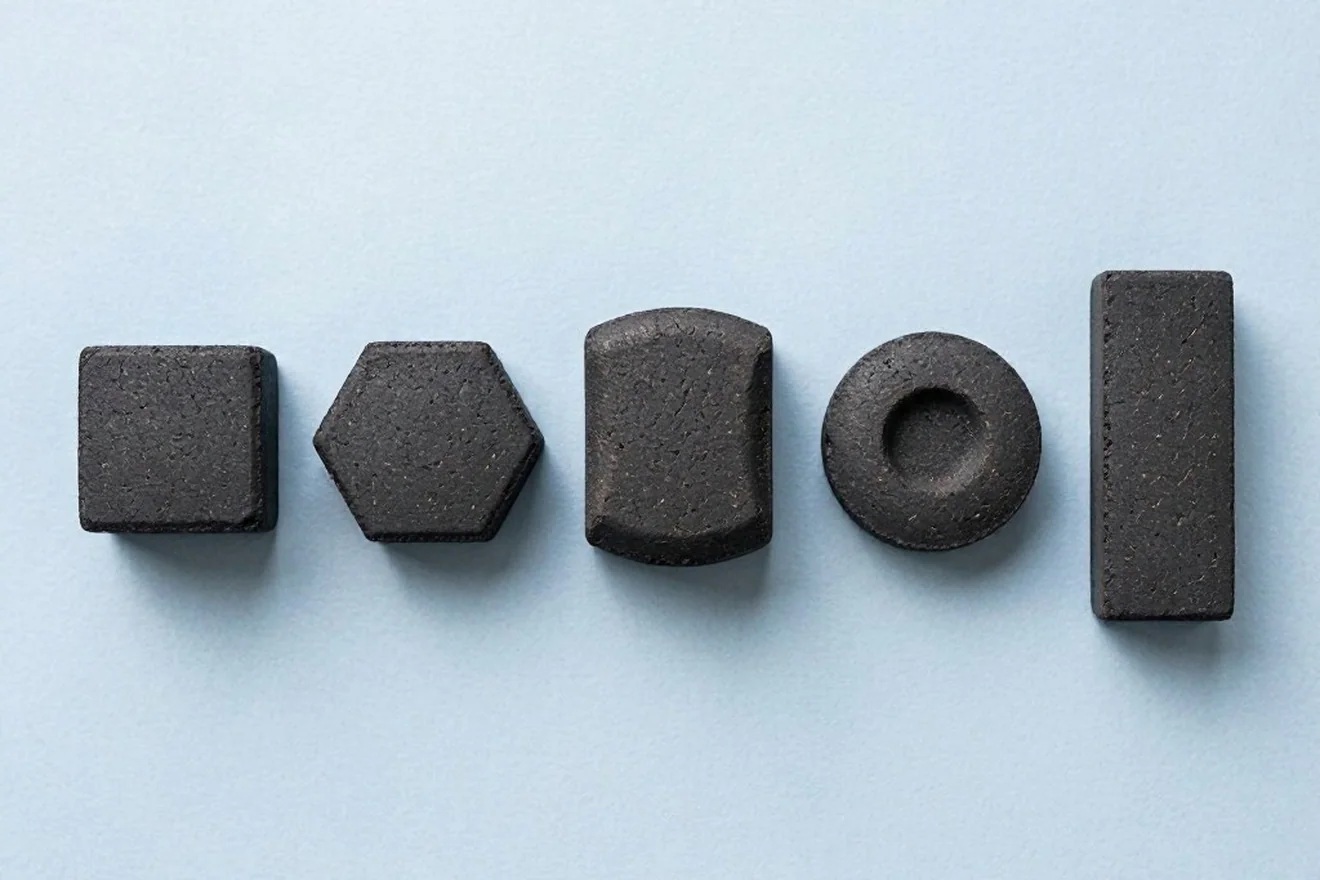
If you are buying hookah charcoal wholesale for the US market, ask for four things before you ask for a price: ash colour, drop test result, burning time and the shape that fits your customer's device. A supplier who cannot put those four numbers on a sheet is selling you a dark cube, not a specification.
For reference, our shisha briquette is documented at ash max 2.5 %, fixed carbon min 76 %, burning time min 2.5 hours, and a drop test of 3+ times, tested on an as-received basis by SUCOFINDO under ASTM D1762. That is the only briquette line in our range with a complete, pointable supplier document — which is why this guide uses it as the worked example.
Why "hookah" is the keyword that matters in the United States
The same product is called shisha charcoal in the Middle East and hookah charcoal in North America. When we reviewed the enquiry list used to build this site, the US share was 40 out of 307 enquiries, and those buyers used the word "hookah". A product page titled only "shisha charcoal" misses the vocabulary of that buyer before the conversation starts.
This is a language issue, not a product difference. The material, the shapes and the laboratory basis are the same. The difference is what the buyer asks first: a distributor in Saudi Arabia tends to ask about ash colour and heat; a distributor in the US tends to ask about consistency between cartons and whether the piece fits a specific hookah head or heat management device.
The four checks, and what a real answer looks like
| Check | What the buyer is protecting | Our documented answer |
|---|---|---|
| Ash colour | The lounge or home customer who does not want grey residue in the bowl | White ash, documented in the supplier letter |
| Ash content | Smoke taste and how much residue is left behind | max 2.5 % |
| Burning time | Session length and carton consumption rate | min 2.5 hours |
| Drop test | Pieces arriving broken after a long sea freight | 3+ times |
A fifth number — fixed carbon min 76 % — tells you how much of the piece actually burns rather than turning to ash. Ask for it together with moisture (max 6 % in our document) and calorific value (min 7,000 kcal/kg). A quote that lists only "100 % coconut shell" is a material claim, not a performance claim.
One caution that applies to every origin: ask on which basis the numbers were measured. Our figures are as-received, SUCOFINDO, ASTM D1762. A fixed-carbon number on a dry basis will look better than the same lot measured as received, and the two are not interchangeable.
Shape is a commercial decision, not a cosmetic one
The mould decides which device your customer can use the briquette with, and moulds need scheduling. The five shapes in our documented shisha line are:
| Shape | Documented size | Usually chosen for |
|---|---|---|
| Cube | 22 / 25 / 26 mm | Standard bowls and retail packs |
| Hexagonal | Ø 26 × 35 / 48.5 / 50 mm | Long sessions, higher heat mass |
| Nuvo | 20 × 20 × 25 / 35 mm | Modern heads with narrower wells |
| Kaloud (HMD) | 1/3 × Ø 44 × 25 mm | Heat management devices |
| Rectangle | 18.5 × 18.5 × 48.5 mm | Private-label packs that need a distinct piece |
If your customer uses a heat management device, order the Kaloud format instead of adapting a cube. Mixing shapes in one container is possible, but moulding time has to be confirmed before the booking — ask for the split at enquiry stage, not after the container is reserved.
How much fits, and what travels with it
The documented loading for the shisha line is 17 MT in a 20ft container and 25 MT in a 40ft high cube, from Surabaya. Charcoal is limited by weight, not by floor space: a container reaches its payload before it looks full. Buyers comparing a per-carton price across two origins should check which loading figure the seller used.
Nine documents travel with a charcoal shipment, including the Dangerous Goods Declaration, MSDS and COA. Charcoal moves as UN 1361, Class 4.2. A seller who describes it as ordinary general cargo has either not shipped it or has not told you the whole story. If you are still deciding between raw materials, our coconut charcoal vs wood charcoal comparison sets out the seven fields to request from both sides.
Three mistakes that cost a repeat order
Buying on carton price alone. Two cartons with the same piece count can contain very different ash and moisture. Ask for the sheet first.
Ignoring the basis of the test. Dry-basis numbers are not comparable with as-received numbers. This single mismatch explains a surprising number of rejected samples.
Assuming the BBQ and shisha lines share a specification. The material is the same coconut shell char, but the cut, density target and pack format are different. Our BBQ briquette page deliberately carries no figures yet, because the supplier document for that line is not finalised. If you need both, ask for each specification separately.
What to send in your first enquiry
Send the shape, target piece size, pack format, monthly volume and the destination port. If you have a specification sheet from your current supplier, send that instead — matching an existing grade is faster than starting from a description. We reply with the current COA, the loading calculation and an honest answer about which moulds can run that month.
See the shisha briquette specification in full, or request a quotation with your target shape and volume.
Sources and data basis
- Product specification and loading: supplier offering letter 12/AGG/CHARCOAL/XI/2026, dated 16 November 2026, as recorded in our shisha briquette data record.
- Indonesian coconut product exports: Directorate General of Foreign Trade, Ministry of Trade, December 2024 newsletter — coconut shell charcoal (HS 44022010) at USD 154.72 million in January–October 2024.
- Enquiry language observation: internal enquiry list used in the site framework, 307 enquiries, of which 40 were from the United States.
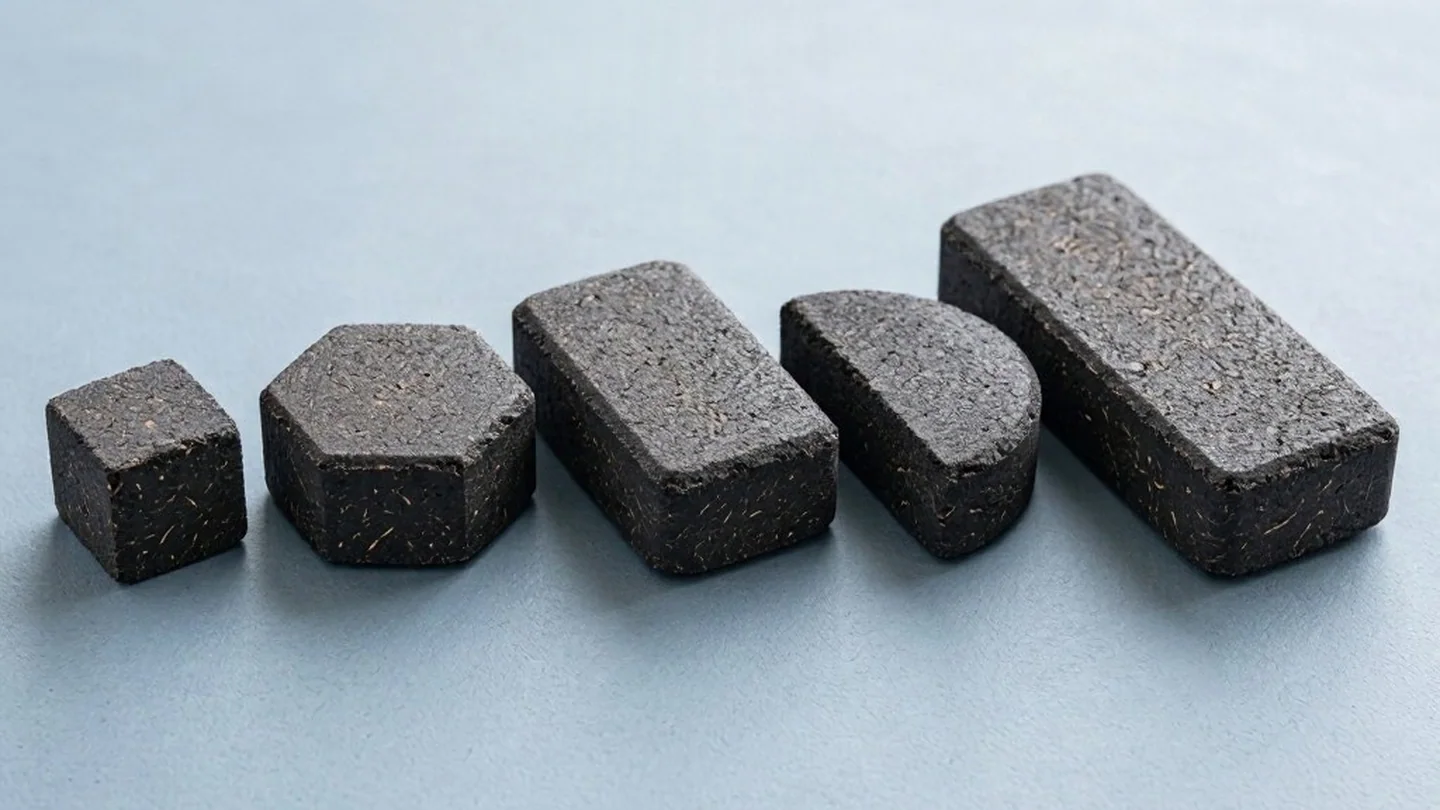
Coconut Shell Charcoal Briquette — Shisha
Ash colour, drop test and burning time decide it, the three things a distributor checks in a sample box.
Spec sheet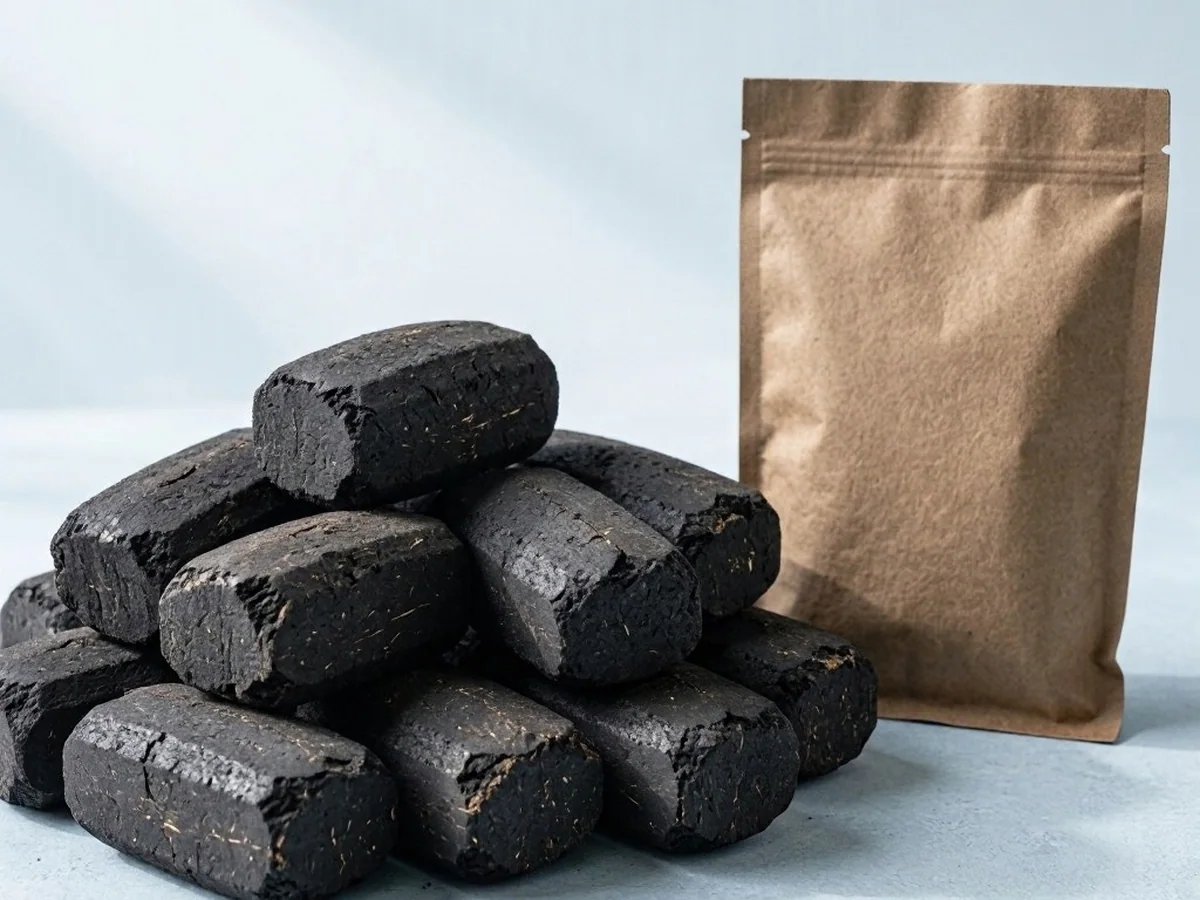
Coconut Shell Charcoal Briquette — BBQ
Burning time and ash decide it; shape decides how fast the grill lights.
Spec sheet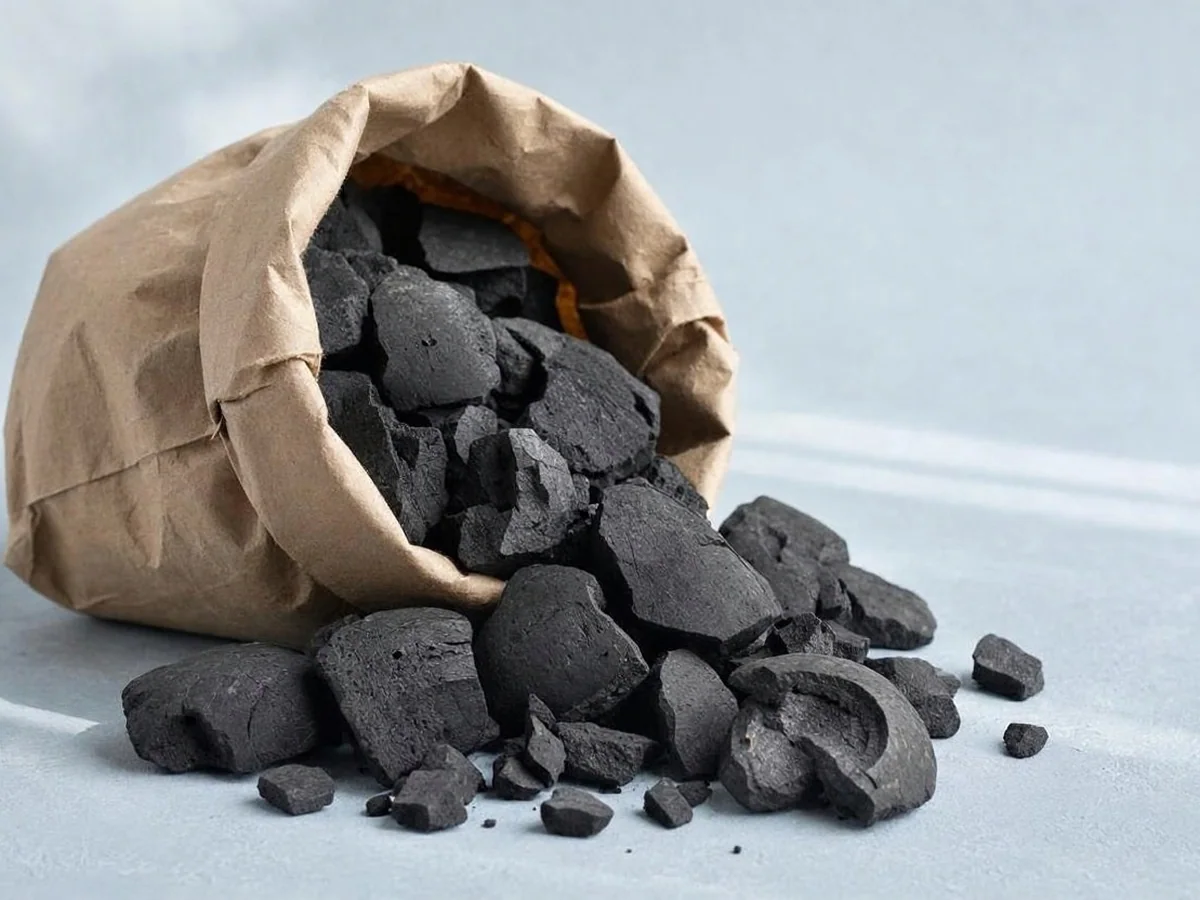
Coconut Shell Charcoal
Fixed carbon and ash decide the grade; sizing decides whether a hookah buyer can use it at all.
Spec sheetDesiccated coconut grades: fine, medium, coarse and macaroon
The four grades describe what the customer will see and chew in the finished product. Here is the selection logic, the two laboratory gates, and what Indonesia exported in 2025.